
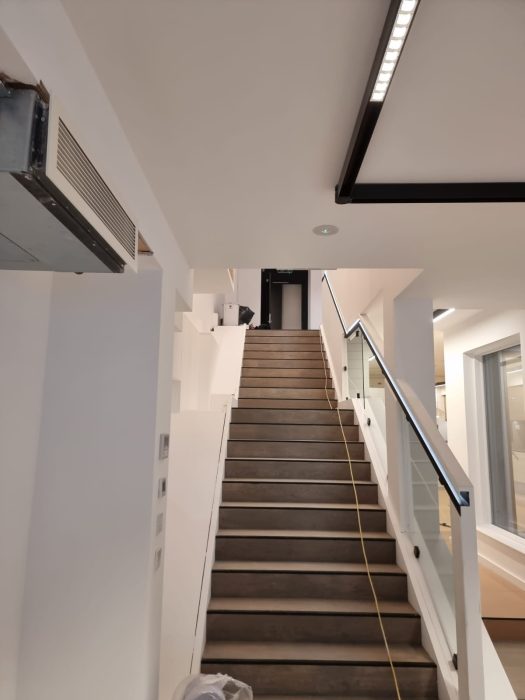
Tiling Stairs Eltham and London Weather: How Moisture, Temperature and Everyday Use Affect Stair Finishes
London’s changing weather can influence stair finishes more than homeowners realise. Rainy autumn days, cold winter mornings and fluctuating indoor humidity can affect the timber beneath tiles and the performance of adhesives and grout. For properties in Eltham and across South East London, successful stair tiling depends on more than choosing an attractive tile. It requires careful preparation, moisture management, suitable materials and attention to everyday safety.
How London Weather Affects Tiled Stairs
The Met Office’s 1991–2020 UK climate averages record approximately 1,163mm of annual rainfall nationally. Although this is not a London-specific figure, it illustrates why moisture management matters in British properties.
Rainwater carried indoors on shoes can make entrance stairs slippery. In older London homes, poor ventilation and existing damp can also affect timber staircases. Moisture may cause wood to swell or change shape while drying can lead to shrinkage. When tiles are fixed to an unstable wooden surface these movements can contribute to cracked grout loose tiles and failed adhesive bonds.
Why Temperature and Humidity Matter
Seasonal temperature changes influence how quickly tile adhesives and grout set. Cold conditions can slow curing while excessive humidity and inadequate ventilation may delay drying. According to Bostik UK’s tiling guidance temperature and humidity should be considered when selecting and applying installation products.
Keep the staircase and surrounding rooms within the product manufacturer’s recommended temperature range during installation and curing. Avoid rushing the process simply because the stairs need to return to daily use.
Tiling Stairs Eltham: Preparing Older London Properties
Eltham has a mix of traditional houses and modern homes. Older properties may have timber treads that flex underfoot or uneven surfaces from previous renovations. Before installation a professional should inspect the staircase for loose boards squeaks structural movement damp and damaged timber.
The Tile Association’s updated guidance highlights the importance of suitable intermediate layers when tiling over wood-based boards. [The Tile Association’s technical guidance](https://www.tiles.org.uk/tta-urges-awareness-on-updates-to-the-british-standard-for-wall-floor-tiling/?utm_source=chatgpt.com). Depending on the staircase this may involve strengthening the structure and installing a compatible tile backer board or other approved system. Directly fixing tiles onto moving timber is risky. Weber UK’s timber tiling guide explains why substrate movement must be addressed before tiling.
Choosing Tiles for Moisture Resistance and Everyday Use
Porcelain tiles are often a practical choice because of their low water absorption and durability. Textured ceramic tiles and suitable natural stone can also work when their maintenance requirements and slip resistance are carefully assessed.
Stair nosings deserve particular attention because tile edges experience repeated impact. Anti-slip profiles can improve grip and protect vulnerable edges. The UK Health and Safety Executive recommends adequate underfoot friction good lighting consistent step dimensions and suitable handrails to reduce falls. See its stairway safety guidance.
Everyday Wear, Cleaning and Long-Term Durability
Family traffic concentrates wear on the front edges of steps and the middle of frequently used treads. Grit brought inside can scratch polished finishes while excessive water during cleaning may affect vulnerable grout joints or poorly sealed stone.
Use a pH-neutral cleaner suitable for the selected tile and avoid harsh chemicals unless the manufacturer confirms compatibility. Check grout joints and stair nosings periodically for cracks looseness or visible wear. For additional installation advice consult Topps Tiles’ staircase tiling guide. Their technical resources explain why substrate stability and correct installation methods matter for long-lasting tiled surfaces.
Professional Stair Tiling with London Finishing Services
Homeowners considering Install Tile On Wooden Stairs in London should arrange an assessment before choosing materials. London Finishing Services provides property finishing and renovation services including tiling, with options spanning ceramic, porcelain, mosaic, slate and natural stone. Its wider services include painting and decorating, flooring renovation and general property improvements.
A suitable quotation should account for structural preparation, tile selection, nosing profiles, adhesive and grout, labour and the time needed to keep the staircase out of use. The company also offers consultations and measuring to help homeowners plan their projects.
For Tiling Stairs Eltham, a site assessment can establish whether existing timber is sufficiently stable and whether moisture problems require attention before work begins. No specific completed stair project has been independently documented here, so the recommendations are based on established installation guidance rather than a claimed project case study.
Practical Planning Before Installation
Before work starts confirm the condition of the staircase and agree on the tile layout. Measure each tread and riser carefully because added tile thickness can affect step dimensions and transitions at the top and bottom. Check relevant building guidance through the official Approved Documents and seek advice where structural alterations or compliance questions arise.
A well-prepared staircase with suitable tiles and correctly installed edges can withstand everyday use while maintaining its appearance through London’s changing seasons.
FAQs:
Can wooden stairs be tiled in London homes?
Yes. However, the timber must be structurally sound and sufficiently rigid. Appropriate reinforcement and a compatible intermediate layer may be necessary before tiles are installed.
How much does stair tiling in Eltham cost?
Costs depend on the number of steps, preparation required, tile choice, nosing details and labour. Request a site assessment and itemised quotation for an accurate price.
Which tiles are best for frequently used stairs?
Durable porcelain or suitable textured ceramic tiles are popular options. Prioritise tested slip resistance, edge protection and ease of maintenance rather than appearance alone.
How long before tiled stairs can be used?
This depends on the adhesive and grout specifications, temperature, humidity and installation system. Follow the manufacturer's stated curing times before allowing normal foot traffic.
Where can I arrange a professional stair-tiling assessment?
Contact London Finishing Services to discuss stair tiling and arrange a consultation. If you plan to Install Tile On Wooden Stairs in London, ask for the staircase structure and moisture conditions to be assessed before installation.
